Gross Profit vs Net Profit: What One Month Shows
Gross profit vs net profit: see how direct costs shape one figure and every recorded expense shapes the other, with a clear worked month.
By Easy Bookkeeping Sheet by Cosmo Suite · Editorial policy
Published · 8 min read

General information, not tax or accounting advice.
Gross profit and net profit answer different questions. Gross profit shows what remains after the direct cost of the goods or services sold. Net profit shows what remains after the other expenses included in the calculation are subtracted too.
A month can have healthy sales and still leave little profit. To see why, separate the cost of making or delivering the sale from the rest of the month's costs. This guide compares the two figures, works through one labeled example, and explains what each number can tell you about your business.
Gross profit vs net profit at a glance
Gross profit is what remains after direct costs tied to the sale are subtracted. Net profit is what remains after the other expenses in the calculation are subtracted too. The first figure looks at the sale itself. The second shows the result after more of the business's costs are included.
| Figure | What it subtracts | What it helps you see | Useful question |
|---|---|---|---|
| Revenue | Nothing in this comparison | Sales or income activity for the period | How much did the business bring in? |
| Gross profit | Direct costs tied to making or delivering what was sold | What remains before other operating costs | Did the sale cover its direct costs? |
| Net profit | The expenses included in the chosen calculation | What remains after those costs | What was left after the listed costs? |
| Bank balance | Not a profit calculation | Cash available in the account at a point in time | What cash is there now? |
For a business that sells products, the IRS explains gross profit as receipts after returns and allowances, minus cost of goods sold in Publication 334. It says service businesses may calculate gross profit from net receipts when merchandise is not an income-producing factor. The exact categories depend on the business.
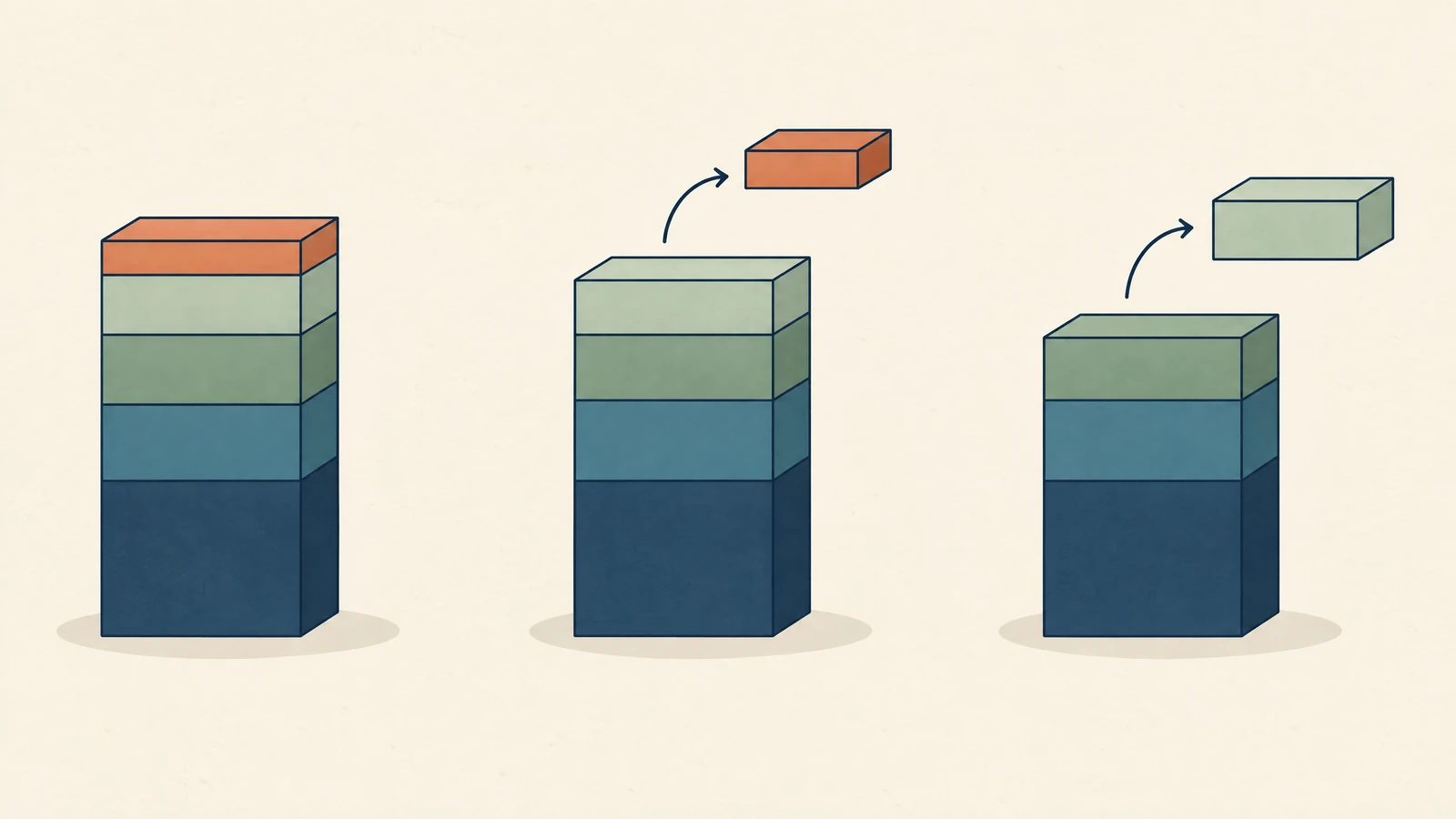
The distinction matters when you review a month. Gross profit can rise while net profit falls if rent, marketing, software, or another cost rises faster than the amount left after direct costs. A bookkeeping spreadsheet that connects income, expenses, and monthly totals can help keep those categories in view.
What does gross profit include?
Gross profit starts with revenue and subtracts the direct costs tied to the goods or services sold. For a small shop, those costs may include the items bought for resale. For a service business, the costs may relate to the work delivered, and the right grouping depends on how that business keeps its books.
Revenue is the money earned from the business's products or services before the expenses in this comparison are subtracted. For a product business, the sale price is part of the revenue picture. A refund or allowance can change the amount used in a formal gross-profit calculation. The IRS explains those steps in Publication 334, including the distinction between receipts, returns, cost of goods sold, and gross profit.
Direct cost is a practical label for costs tied to making or delivering the sale. Inventory used to fulfill orders is a familiar example. A consultant may pay a contractor to complete part of a client project. That cost is different from a general monthly bill such as website hosting or office rent.
The line between direct and other expenses is not identical for every business. A service provider, retailer, and online seller can organize costs differently. Keep the same approach from month to month, and ask an accountant how to classify an item when the distinction affects your statements or tax records.
Gross profit gives a closer look at the sale before the wider cost of running the business is included. It does not tell you whether the business has covered every bill for the month. That is why the second figure matters too.
What does net profit include?
Net profit is what remains after the costs included in the calculation are subtracted from income for the period. In a simple monthly review, that may mean starting with the business's recorded income, subtracting direct costs, then subtracting other recorded expenses such as rent, subscriptions, marketing, or professional services.
The word “net” depends on what the report includes. One report may include a broad set of expenses; another may show a specific profit line before certain costs. Read the report labels and notes before comparing two businesses or two tools. A number called “profit” on a monthly tracker may also differ from a tax return figure.
The IRS's Schedule C instructions show this distinction in a tax-return context. They list business income and expenses, then explain how the net-profit line is figured. The instructions also describe situations where additional rules affect the reported amount. Use the monthly example here to understand the terms, not to calculate a tax result.
The IRS says a business can choose a recordkeeping system suited to its work, as long as it clearly shows income and expenses. Its recordkeeping guidance says records should summarize transactions and support the amounts entered. Those records help explain how a period's figures were built. A profit total alone does not replace the entries behind it.

Can gross profit be positive while net profit is negative?
Yes. A business can have money left after direct costs and still show a loss after its other expenses are included. This happens when the remaining gross profit is smaller than the additional expenses in the period.
For example, imagine a shop's direct costs are covered by its sales, but it also pays for rent, marketing, software, and a one-time repair. Gross profit can remain positive because the direct costs are below sales. The final result can still be a loss if the other expenses are larger than that amount.
The comparison tells you where to look next. If gross profit is steady and net profit changes, review the other expense categories. If gross profit changes, review sales, refunds, and the direct costs connected to those sales. Neither figure explains the cause on its own. The dated entries and supporting documents give you the detail.
This is one reason a large sales number can feel disconnected from the money left at the end of a month. Sales activity and the cost of producing that activity are only part of the picture. The remaining expenses still have to fit inside what is left.
What does one illustrative month look like?
This labeled example uses a small online shop to show how the two totals differ. The figures are illustrative only. They are not customer data, product results, a benchmark, or tax guidance.
The shop records $6,000 in revenue for the month. Its inventory cost for the goods sold is $2,400. That leaves $3,600 in gross profit. The shop then records $1,050 in other expenses: $420 in platform and payment fees, $250 in rent, $180 for software, and $200 in marketing. Subtracting those costs leaves $2,550 in net profit for this simplified example.
| Illustrative monthly line | Amount | Running result |
|---|---|---|
| Revenue | $6,000 | $6,000 |
| Inventory cost tied to goods sold | −$2,400 | $3,600 gross profit |
| Platform and payment fees | −$420 | |
| Rent | −$250 | |
| Software | −$180 | |
| Marketing | −$200 | $2,550 net profit |
The gross-profit line answers, “After the inventory cost, what remains from these sales?” The net-profit line answers, “After the listed costs for this example, what remains?” The $1,050 gap is exactly the four other costs in the table. If you change the figures or the categories, the totals change with them.

These labels are not a tax classification guide. The table leaves tax out of the arithmetic and says nothing about whether an item is deductible. Record the business transaction and its supporting document, then get qualified help when you need a tax or accounting decision.
What changes the gap between gross and net profit?
The gap changes when the costs counted after gross profit move, or when the business changes which costs it includes in each calculation. A month-to-month comparison is useful when the period and category labels stay consistent.
- Direct costs: A new supplier price or a different mix of products can change the amount left after direct costs.
- Other expenses: Rent, subscriptions, marketing, and service fees affect the later total when they are included in the period.
- Timing and labels: A bill recorded in a different month or moved to a different category can change the comparison without changing the underlying transaction.
Look at the entries behind the totals before deciding that one number is “good” or “bad.” A larger gap could reflect higher operating costs, but it could also come from how a cost was grouped or when it was recorded. Keep the source documents with the transaction so you can check the line later.
This small-business bookkeeping spreadsheet with monthly and annual overviews groups recorded income and expenses so you can review totals alongside their categories. If you need the separate process for building a statement, see this walkthrough for making a profit and loss statement.
Profit and cash are also different. A profit total summarizes the income and expenses included in a period. A bank balance reflects cash at a particular time, including payment timing and other money movements. The two numbers can differ without either being wrong.
Why trust this article?
The Cosmo Suite team publishes the Easy Bookkeeping Sheet and is not an independent accounting firm. Read about our team and our editorial policy. We checked the IRS Schedule C instructions, IRS Publication 334, IRS small-business recordkeeping guidance, and the U.S. Small Business Administration's financial-terms glossary on 4 November 2026. The month above is a constructed example. This is not tax advice; ask a tax professional about your situation.
Where Easy Bookkeeping Sheet fits
Easy Bookkeeping Sheet includes income and expense entry tabs, category setup, monthly and annual overviews, and profit tracking in Excel and Google Sheets. Its monthly overview can help a solo owner see recorded income, expenses, and profit totals in one workbook.
The Easy Bookkeeping Sheet workbook is designed for straightforward record keeping. It is not a double-entry ledger, it does not file taxes, and it does not give tax advice. If you use it, keep the receipts and other documents that support your entries. The IRS describes the value of a recordkeeping system that clearly shows income and expenses in its small-business recordkeeping guidance.
For businesses with payroll, invoicing, bank feeds, or more involved accounting, use a product built for those jobs or work with an accountant. A monthly profit total is useful context. It is one part of understanding your books.
Frequently asked questions
What is the difference between gross profit and net profit?
Gross profit is the amount left after subtracting direct costs tied to the goods or services sold. Net profit is the amount left after the other expenses included in the calculation are subtracted too. Read both labels with the report's definitions, because businesses can group costs differently.
Can a business have gross profit but a net loss?
Yes. A business can have money left after direct costs and still have a loss after its other expenses are counted. Rent, software, marketing, and other costs may use up more than the gross profit for that period.
How do I calculate gross profit?
For a product business, start with sales after returns and allowances, then subtract the cost of the goods sold. Service businesses may not have a cost-of-goods-sold calculation. The right categories depend on the business and its accounting method.
How do I calculate net profit?
At a simple bookkeeping level, subtract the expenses included in the period's calculation from the income for that period. A tax return can apply additional rules, so a monthly tracking figure is not a substitute for tax guidance.
Is tax based on gross profit or net profit?
Tax treatment depends on the business, the income, the expenses, and the applicable rules. Gross profit and a spreadsheet's monthly profit total do not determine your tax by themselves. Check the IRS guidance for your filing type or ask a qualified tax professional.
Does net profit mean the same amount is in my bank account?
No. Profit summarizes income and expenses for a period. Your bank balance also reflects when customers pay, when bills clear, owner deposits or withdrawals, and other cash movements. Check the bank balance and profit total separately.
