Bookkeeper vs Accountant: Which One a One-Person Business Needs First
Bookkeeper vs accountant: who records and who advises, which one a one-person business needs first, and when a simple sheet covers the bookkeeping.
By Easy Bookkeeping Sheet by Cosmo Suite · Editorial policy
Published · 8 min read
Most of the advice on bookkeeper vs accountant is written by firms that sell one of the two services. That makes the answer sound like "buy both" before you have described your own situation. For a one-person business the better question is smaller: what is going wrong right now?
The short answer: a bookkeeper records your money in and money out. An accountant reads those records and advises on them. If the records are the problem, fix the books first. If the records are fine and the questions are about tax, call an accountant. Below is a table, then a worked month, so you can see which job you actually have.
Bookkeeper vs Accountant at a Glance
A bookkeeper is the person who keeps the record of what came in and what went out. An accountant is the person who turns that record into statements, returns and advice. The jobs overlap at the edges, but the centre of each is clear.
| Bookkeeper | Accountant | |
|---|---|---|
| Main job | Records every sale and cost, by category | Reads the records, prepares statements and returns, advises |
| Works on | The past month or week | The year and what to do next |
| You hand over | Receipts, bank statements, invoices | The finished books, a year summary |
| You get back | Books that add up | A return, a view of profit, answers |
| Needed when | The records are late, messy or too many | The return is due or a decision needs advice |
| Best for | Heavy volume or a pile to clear | Tax questions, growth, a lender asking for statements |
The table shows why the two are not rivals, because the accountant's work depends entirely on the quality of the bookkeeper's records, and somebody, whether that is you, a sheet or a professional, has to do the recording before anything else can happen.
What does a bookkeeper actually do?
A bookkeeper records each sale and each cost with a date, an amount and a category. Done well, that gives you income, expenses and profit for any month you pick. Xero's page comparing the two terms, published 24 July 2026, treats bookkeeping as the recording work and accounting as what is built on top of it (Xero). Firms define the edge differently, so read what a quote includes.
Notice what is absent from that list, which is advice, tax planning and the preparation of returns, all of which belong to the accountant's side of the relationship. A bookkeeper who also does those is wearing a second hat, usually for a second fee.
What does an accountant actually do?
An accountant works with the finished records. They prepare the return, build statements a lender or tax office will read, and tell you what the numbers mean for your situation. Such jobs cannot come from a spreadsheet alone. They depend on rules that change and on facts about you. Could a sheet do them? No.
For a one-person business this often means one or two conversations a year. Before the first one, ask what format they want. A year summary by category is something most accountants can read quickly.
Which one does a one-person business need first?
Look at the symptom, not the job title. Which of these sounds like you?
- "I am behind on entries." You need the books done. That can be you, a sheet or a bookkeeper.
- "I do not trust my totals." Same: the books. Find out why they disagree before anyone advises on them.
- "My books are fine and I do not know what to claim or file." You need an accountant.
- "A lender or agency wants a profit and loss statement." You need the books first, then maybe an accountant to sign off.
Most people who write "I need a bookkeeper" mean the first or second line. Consider what that means: it is a record problem with a cheaper fix than a monthly retainer, provided the volume is small.
How does a worked month show the difference?
We built these example figures for a freelance designer for this guide on 13 October 2026, and we checked the totals line by line. They are not customer data.
| Date | Entry | Money in | Money out | Category |
|---|---|---|---|---|
| 3 Mar | Client A, logo project | $1,200 | Design fees | |
| 9 Mar | Design software, monthly | $55 | Software | |
| 14 Mar | Client B, brochure | $800 | Design fees | |
| 18 Mar | Coworking day pass | $25 | Workspace | |
| 27 Mar | Client C, retainer | $500 | Retainers | |
| Month total | $2,500 | $80 | Profit: $2,420 |
For example, five lines is the bookkeeper's work: record, categorise, add up. The accountant's questions come after: what part of $2,420 is taxable, what can be set aside, whether a laptop belongs on this year's return. Those answers depend on rules and on your facts, so ask a professional. Entering five lines is a Sunday job, about 10 minutes once the categories exist. Scale it up: 5 clients and 25 costs a month is still 30 lines, or 360 lines a year, which is well inside what one person can keep. If your month looks like this, paying for the first role is optional, and the second is worth one call a year.
Do the records have to come from a bookkeeper or software?
No. The IRS says: "You may choose any recordkeeping system suited to your business that clearly shows your income and expenses" (IRS, page reviewed 3 August 2026). A sheet that is complete and readable qualifies. In the UK, GOV.UK asks sole traders for the same kind of record of income and expenses.
That does not make every sheet good. The test is whether, a year later, you or an accountant can follow every line. Our guide to five checks a bookkeeping spreadsheet should pass before tax time covers it.
When is a bookkeeper worth hiring?
A bookkeeper earns the fee in a few clear cases:
- The volume is high. Hundreds of lines a month is a job, not a Sunday.
- There is a backlog. A year of loose receipts is a one-off clean-up that suits a professional.
- You need systems. Payroll, invoicing and bank feeds are software work that someone has to set up.
- Your time earns more elsewhere. If an hour of billable work pays more than the hourly fee, hire.
If none of those fits, look at the cost side before deciding. What QuickBooks and its cheaper alternatives cost over a year shows what a software route adds on top.
What should you hand an accountant at year-end?
A year summary is the list of income and expense totals by category for the whole year, plus the profit line. It is the page an accountant reaches for first, so it is the page worth getting right.
Hand over these four things, in this order:
- Income by category, with the year total.
- Expenses by category, with the year total.
- Tax collected and tax paid, if you charge sales tax or VAT.
- The profit line, with the month-by-month view behind it.
Receipts stay in your own folder, labelled and ready if a question comes up. What the accountant needs from you is a clean summary, not the pile. Does that mean you need a bookkeeper to produce it? Not at a few dozen transactions a month. It means you need one place where every entry lives and one category list.
Which setup fits which kind of one-person business?
Three sample setups, built for this guide on 13 October 2026. None is a customer case.
| Sample setup | Entries a month | Bookkeeping | Accountant |
|---|---|---|---|
| Freelance writer, 4 clients | About 15 | A sheet, 20 minutes a Sunday | One call before the return |
| Online shop, 3 sales channels | About 150 | Sheet or software; a bookkeeper if time is short | Yearly, and when stock questions come up |
| Side hustle next to a day job | About 8 | A sheet | One call, or none if the return is simple |
The shop row is where the line moves. At around 150 entries a month the recording is a real job, and the choice between a sheet, software and a person depends on how you spend your time. The other two rows rarely need more than the sheet plus an occasional professional.
Ask your accountant one question early: "What format do you want my records in?" Some want a spreadsheet, some a login to their own software. The answer costs one email and decides whether a sheet works for you. If they name a specific tool, use that tool. Software is the right pick when your accountant works in it, and we say so plainly.
Why Trust This Article
The Cosmo Suite team, who make the Easy Bookkeeping Sheet, wrote this guide, so we are not neutral about spreadsheets. Read about who runs this site and our editorial policy on sources and corrections. The worked month is an example we built, not customer data. The IRS quote and the Xero reference come from the pages linked above, opened on 13 October 2026. This is record keeping, not tax or accounting advice; ask a professional about your situation.
How the Easy Bookkeeping Sheet Fits In
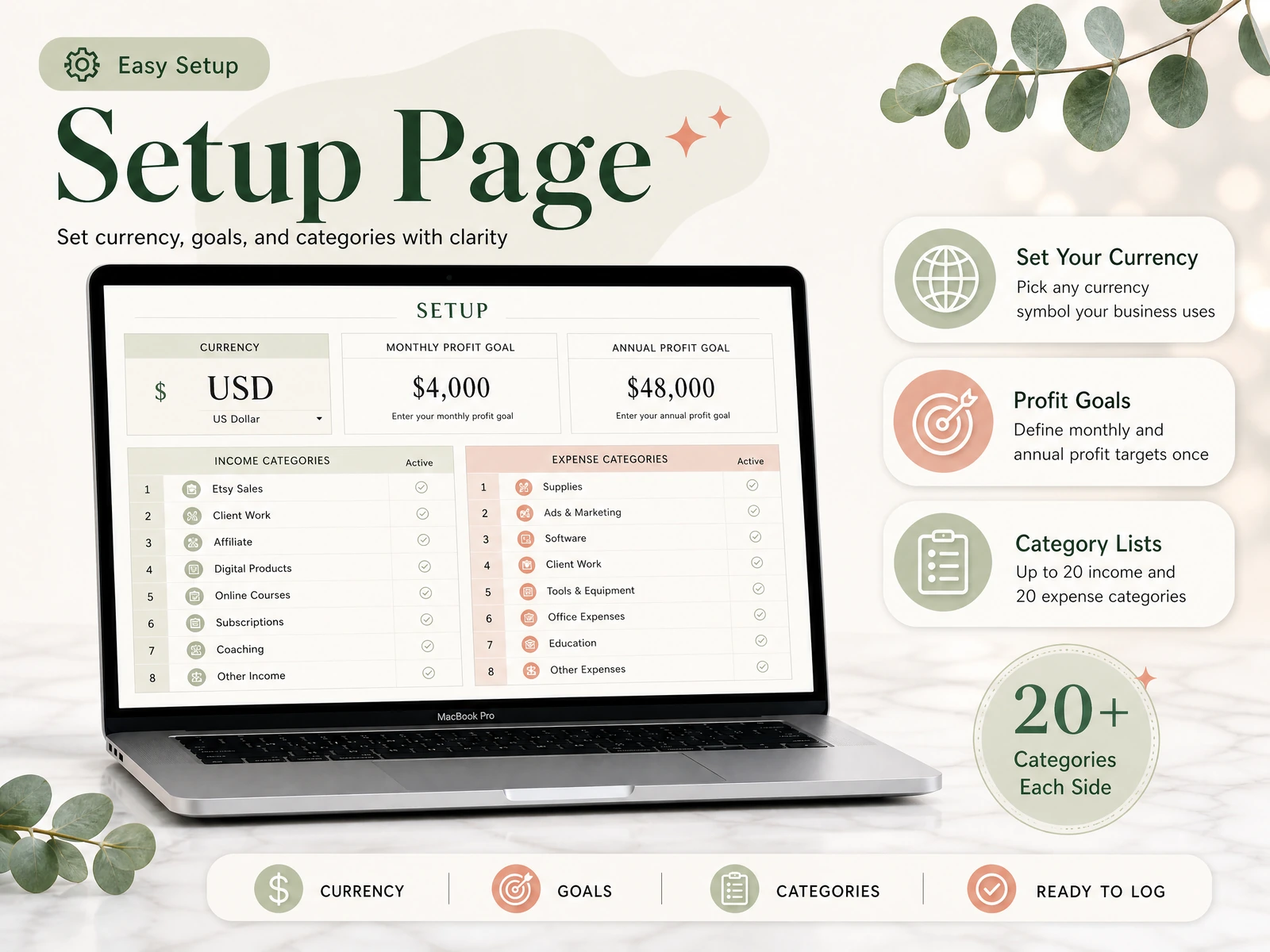
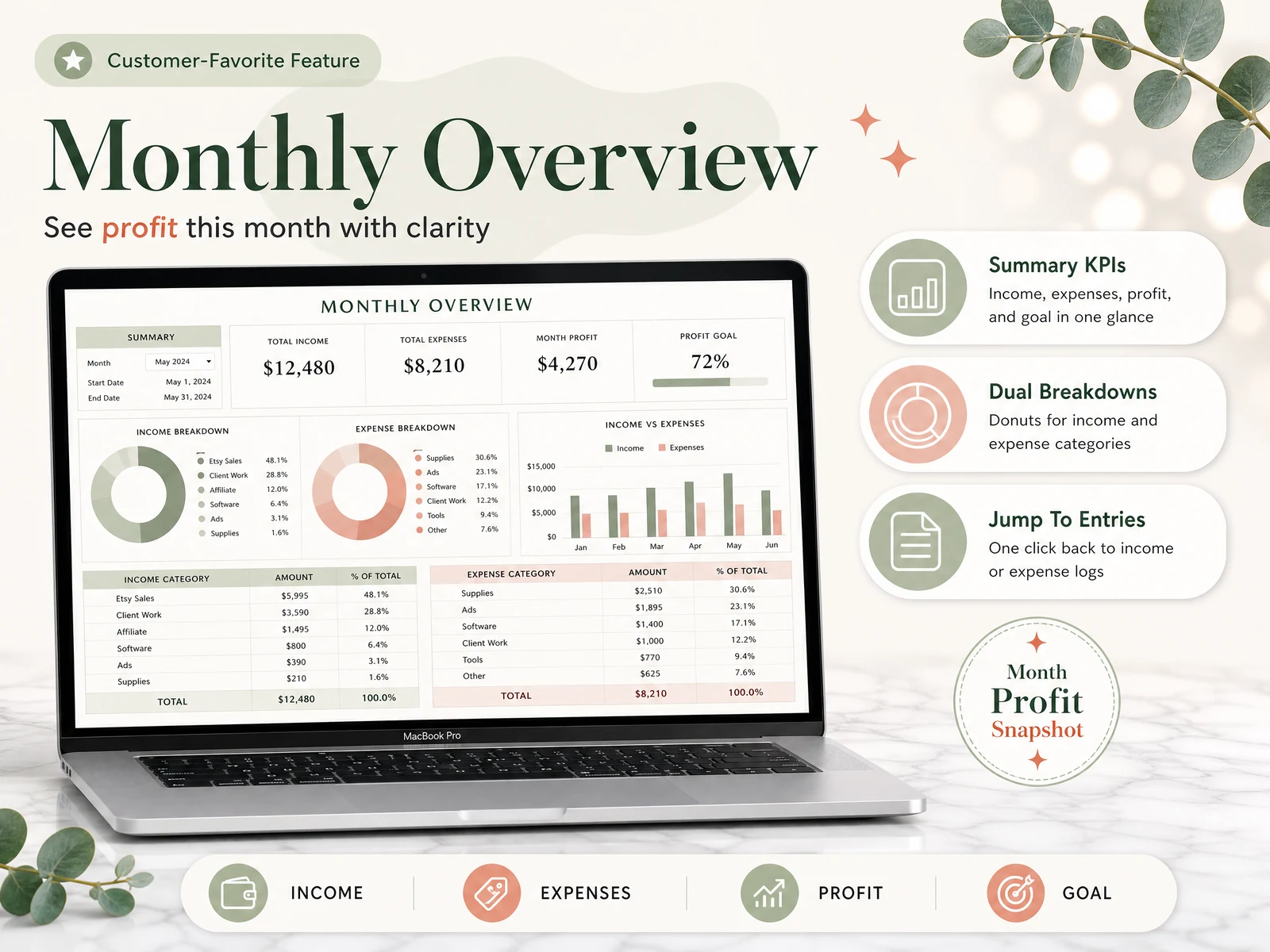
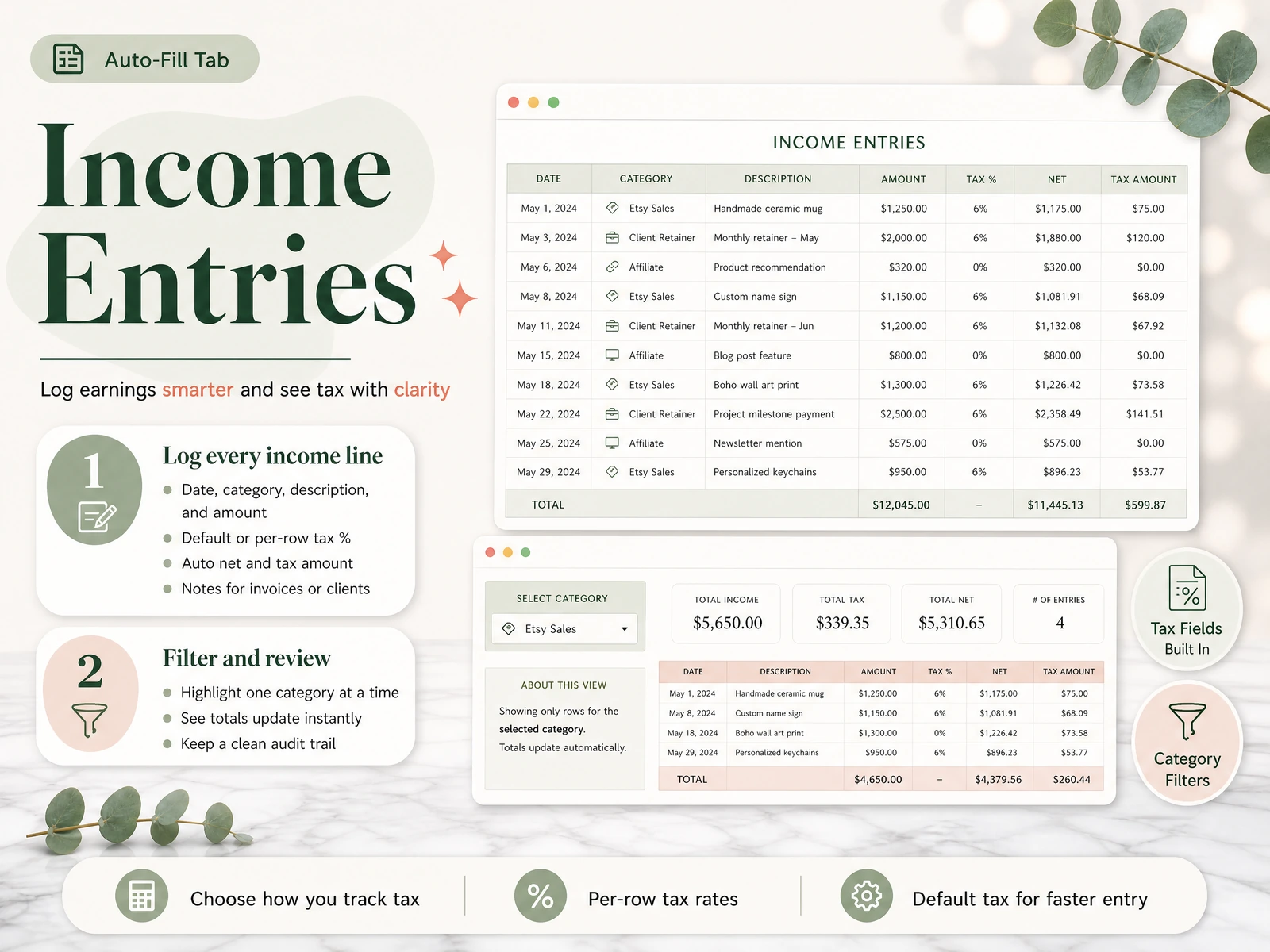
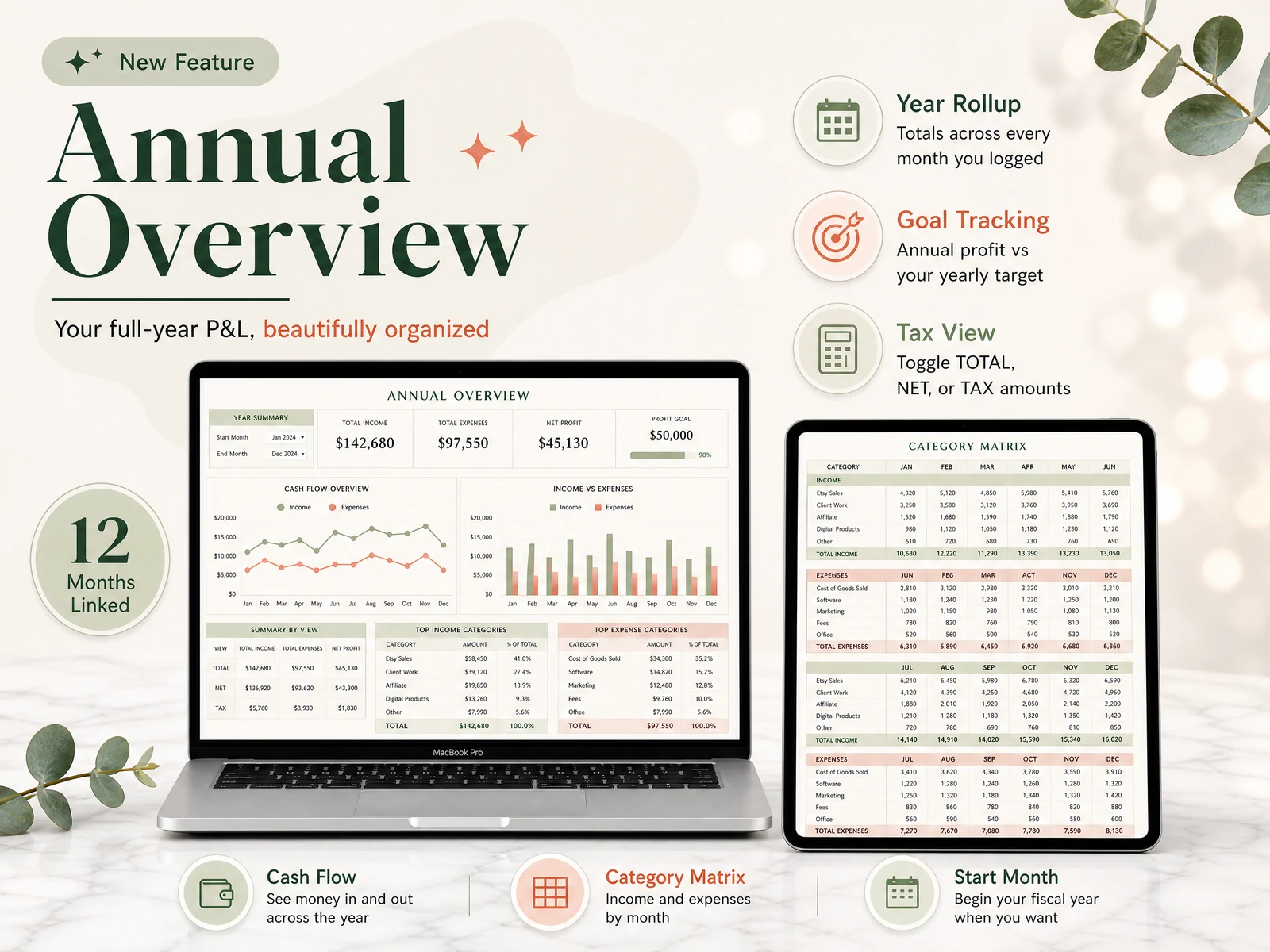
If your problem is records, not advice, a bookkeeping spreadsheet with a tax rate on every line covers the recording job. You set up to 20 income and 20 expense categories once, then log each sale and cost with a date, category, description and amount. Net and tax fill themselves, and the Monthly Overview and Annual Overview build from the log.
It tracks income, expenses, tax and profit, in Excel and Google Sheets, for $9 once. It is not a double-entry ledger, and it has no bank feeds, invoicing or payroll. It does not file anything or give tax advice. When the year ends, you can hand your accountant the Annual Overview by category instead of a folder of receipts.
Frequently Asked Questions
Frequently asked questions
Do I need a bookkeeper or an accountant first?
It depends on what is hurting. If your records are late or unclear, you need the books done, by you, a sheet or a bookkeeper. If your records are fine and you have questions about tax or a return, you need an accountant. Many one-person businesses start with a sheet and an accountant.
What is the difference between a bookkeeper and an accountant?
A bookkeeper records money in and money out. An accountant reads those records, prepares statements and returns, and advises. The first job feeds the second, so clean books make the accountant's work faster.
Can an accountant do my bookkeeping?
Yes, many firms offer both. It is usually a separate service with its own fee, so ask what is included before you agree.
Can I do my own bookkeeping with a spreadsheet?
Yes. The IRS says you may choose any recordkeeping system suited to your business that clearly shows your income and expenses. A spreadsheet qualifies if it is readable and complete. Ask your accountant whether your category names fit your return.
When does a bookkeeper become worth it?
When the volume or the mess is more than you can keep up with, when you need payroll or bank-feed software set up, or when your time is worth more elsewhere. A few dozen transactions a month rarely reach that point.
Do I still need an accountant if I use a bookkeeping sheet?
Often yes, for the return itself and for advice on your situation. A sheet gives the accountant a clean year summary by category. It does not file anything or give tax advice.
What is the fastest way to get tidy books before I talk to an accountant?
Log each sale and cost once, with a category and a tax rate, in a file that builds the monthly and annual overviews for you. The Easy Bookkeeping Sheet does that for Excel and Google Sheets at $9 once.
Sources
Keep reading
Bookkeeping Basics
Bookkeeping Spreadsheet: 5 Checks Before You Trust It at Tax Time
Bookkeeping spreadsheet checks: 5 tests your sheet must pass before tax time, a worked month with real numbers, and when software is the better pick.
· 8 min read
Bookkeeping Basics
How Long to Keep Business Records: A Simple Guide
How long to keep business records depends on the document. See the IRS periods for income, employment, and property records, plus a simple filing routine.
· 7 min read
