How Long to Keep Business Records: A Simple Guide
How long to keep business records depends on the document. See the IRS periods for income, employment, and property records, plus a simple filing routine.
By Easy Bookkeeping Sheet by Cosmo Suite · Editorial policy
Published · 7 min read
General information, not tax or accounting advice.
For records that support an income tax return, the usual period is three years after filing. That is a starting point, not a date to apply to every receipt. Some records need six or seven years, some must be kept indefinitely, and employment or property records follow different rules.
For a small business owner, the useful question is: what does this document support? Match the receipt, invoice, bank statement, or asset record to the income or expense entry it explains. Then use the IRS period that applies to that kind of record. If a situation is unusual, ask a tax professional before clearing the folder.
Business Record Retention at a Glance
| Record or situation | IRS period | What to remember |
|---|---|---|
| Records supporting an income tax return | Generally 3 years | The period usually runs after filing; early-filed returns count as filed on the due date |
| Claim for a credit or refund after filing | Later of 3 years from filing or 2 years after paying | Use the later date |
| Worthless securities loss or bad debt deduction | 7 years | Applies to these claims |
| Income omitted by more than 25% of gross income shown | 6 years | A specific exception |
| No return filed or fraudulent return | Indefinitely | The IRS lists no time limit in these cases |
| Employment tax records | At least 4 years after tax is due or paid, whichever is later | Separate employment-tax timeline |
| Property records | Until the limitations period ends for the year of taxable disposal | Keep records that establish basis and depreciation |
These are IRS federal income-tax and employment-tax periods, not one universal retention schedule for every business document. Insurance contracts, loan terms, grants, state rules, or an active dispute can create other reasons to hold records. The IRS also says to keep copies of filed returns (IRS, “How Long Should I Keep Records?”, retrieved October 16, 2026).
If your current bookkeeping lives across email, bank downloads, and a spreadsheet, start by making each entry traceable to its supporting document. A bookkeeping spreadsheet with a consistent category list and annual view can help you see the year’s income and expenses, while the source records remain stored separately.
Why is “keep everything for 7 years” incomplete?
Seven years is an IRS period for a defined case: a claim for a loss from worthless securities or a bad debt deduction (IRS, “How Long Should I Keep Records?”, retrieved October 16, 2026). It is not the default period for every small business receipt. For many records supporting an income tax return, the general IRS period is three years.
The six-year period also has a condition. It applies if you leave out income you should have reported and the omitted amount is more than 25% of the gross income shown on the return. The no-return and fraudulent-return cases have no time limit in the IRS table. These are exceptions, so do not choose a retention period from a generic “three, six, or seven years” list without checking which one fits.
The period is usually measured after the return was filed. If you filed before the due date, the IRS treats it as filed on the due date for this purpose. If you filed a refund claim after filing, the IRS says to retain the records for three years from the original filing date or two years from the date you paid the tax, whichever is later.
Keep the filed return itself. The IRS says it can help prepare future returns and make calculations if you amend a return. It also gives you a yearly reference point when you sort the documents behind it.
Which records need a different timeline?
Employment and property records do not fit neatly into a simple year-end folder rule. If you have employees, keep employment tax records at least four years after the tax becomes due or is paid, whichever is later (IRS Publication 583, retrieved October 16, 2026). That clock can differ from the income-tax period for the same calendar year.
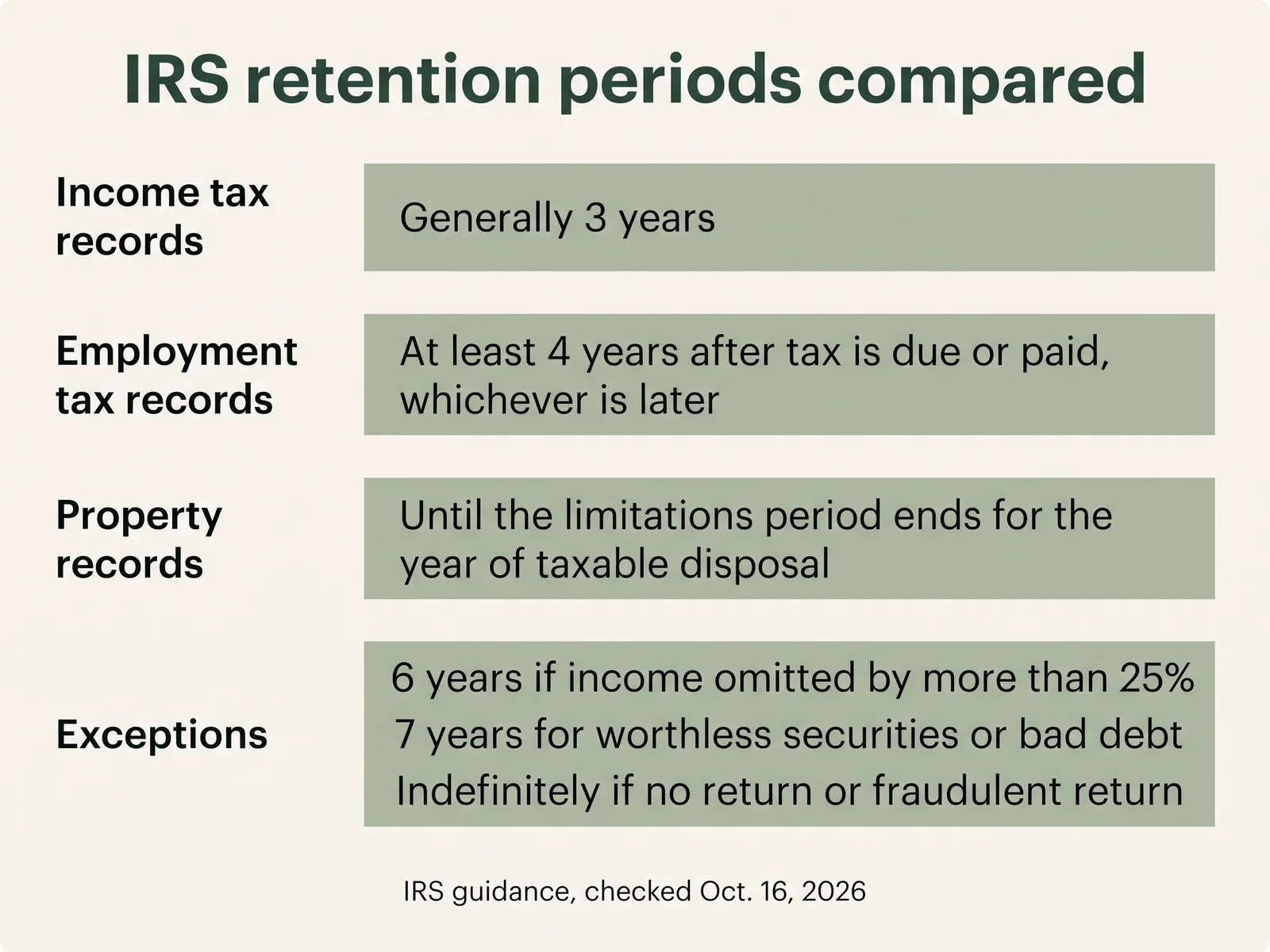
Property records may need to stay with you longer. The IRS says to keep records relating to property until the period of limitations expires for the year you dispose of it in a taxable disposition. They help establish basis and calculate depreciation, amortization, depletion, or gain or loss. If you exchanged property without tax, records for the earlier property may carry forward to the newer property.
There can also be non-tax reasons to keep something. The IRS names insurers and creditors as examples of parties that may require records for longer. Check the terms of a policy, loan, contract, or claim before you discard the documents it depends on. State and industry requirements can differ, so this article does not set a retention schedule for them.
How can you organize business records for year-end?
Use a simple chain: transaction, entry, source document, and year. For example, label a sample expense entry “software subscription, March 12” and keep the matching receipt or account statement in a March folder. The label is only an organizing example; use the description and category that fit your own books.
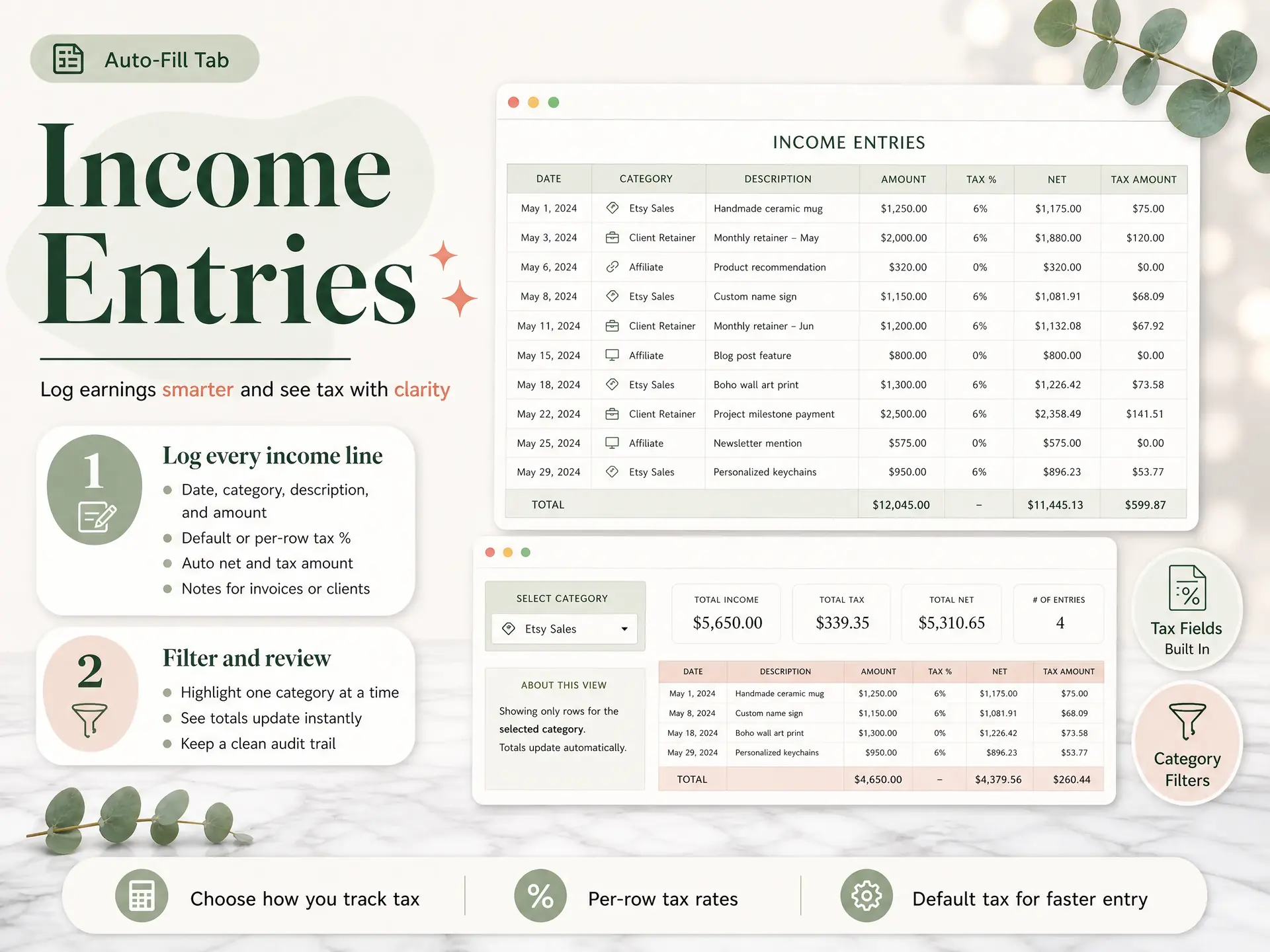
A practical routine can look like this:
- Save receipts, invoices, and statements in a dated folder as they arrive.
- Enter each business transaction in your bookkeeping log with a date, category, description, amount, and a note that helps you find its source.
- At month end, compare the entries with the bank or card statements you use for the business. Mark missing documents for follow-up.
- Keep the monthly summary beside the source files, and keep a separate copy of the filed return.
- Add an extra hold date when a record relates to property, employees, a refund claim, or another exception.
A small business bookkeeping template that keeps income and expense categories consistent can make the entry-to-summary part easier to follow. The receipt or statement still matters: a total in a spreadsheet does not show the underlying transaction by itself.
For paper records, use a filing method you can maintain. For digital files, retain a readable original or scan, use a backup, and test that the backup opens. The IRS permits electronic records, but you still need enough detail to support the entries on your return (IRS Publication 583, retrieved October 16, 2026). Do not delete the only copy because it is also attached to an email or stored in an app you may stop using.
What should a simple bookkeeping system track?
Start with the information that lets you identify a transaction and retrieve its proof: date, amount, income or expense category, description, and the document location. Separate business and personal items in your records, and avoid relying on a bank statement alone when it does not explain the purpose of a purchase.
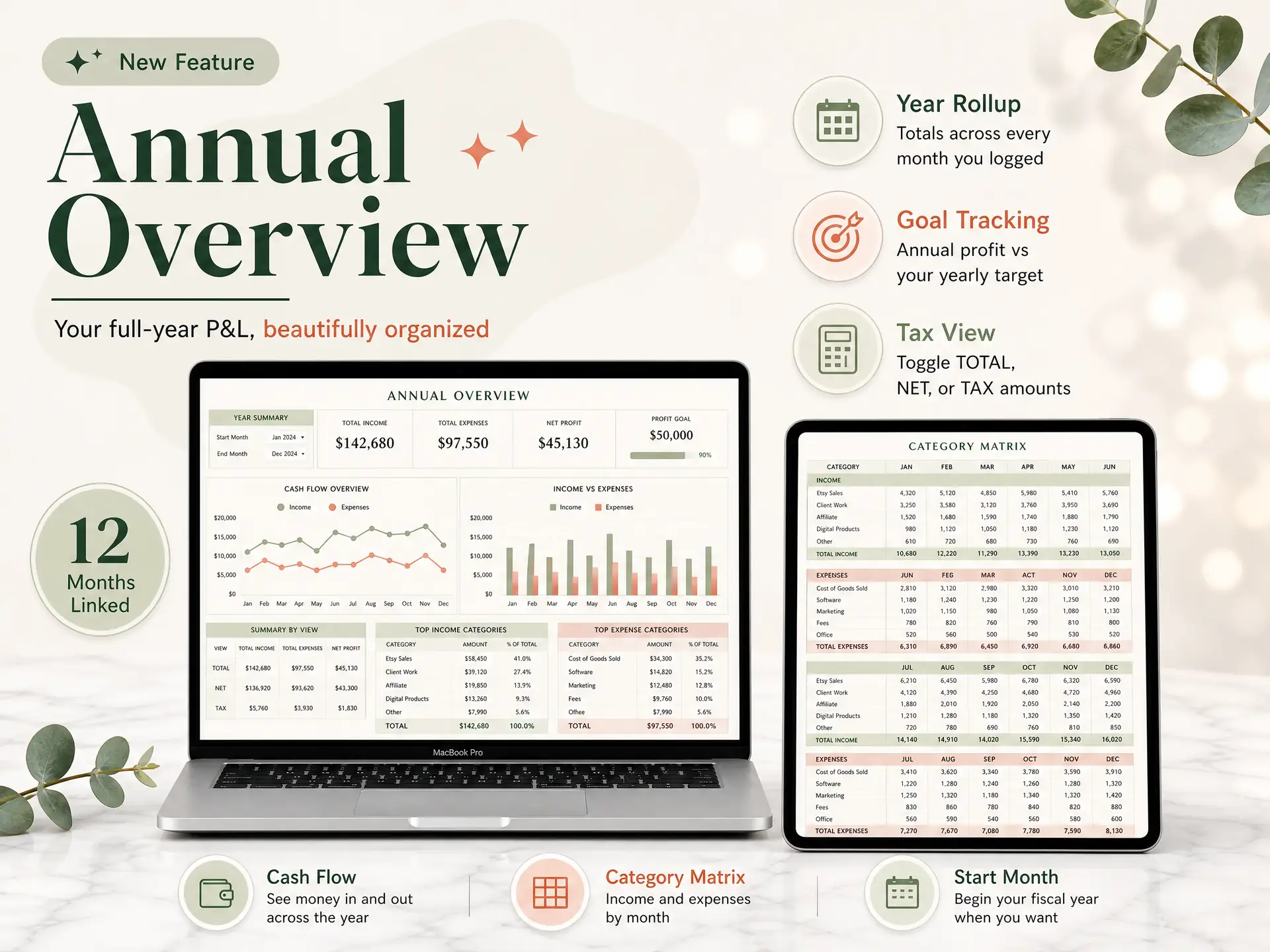
A bookkeeping spreadsheet that carries each entry into monthly and annual overviews can organize the numbers for a small, straightforward business. The job of the sheet is to summarize entries. It does not store receipt images, scan paperwork, file a return, or determine which expenses qualify for a deduction. Keep those source documents in a separate, backed-up filing system.
If you are setting up your process for the first time, the five checks for a bookkeeping spreadsheet cover category consistency, tax fields, and the path from entries to an annual summary. A month-end review is also a good time to catch blank descriptions or uncategorized transactions while the purchase is still familiar. Use the same folder names every month, then make a copy of the year-end folder before filing. A second copy protects against losing access to a laptop or email account. Test the copy once: open a few files and check that the names, dates, and amounts remain readable. If a record supports an asset purchase, keep it with the asset information instead of deleting it with an ordinary monthly folder.
Why Trust This Article
The Cosmo Suite team makes the Easy Bookkeeping Sheet, so we have a product interest and are not a neutral software reviewer. This article uses the IRS pages “How Long Should I Keep Records?” and Publication 583, checked October 16, 2026. The IRS source gives federal record-retention periods; your circumstances and other requirements may change what you need to keep. See our About page and Editorial Policy. This is general information, not tax advice. Ask a tax professional about your situation.
Where the Easy Bookkeeping Sheet Fits
The Easy Bookkeeping Sheet organizes income and expense entries and carries them into monthly and annual overviews. Its categories and totals can help you prepare a year-end summary, but you still need to save the receipts, statements, and other records behind each entry.
It does not file taxes, scan receipts, reconcile bank accounts, or give tax advice. It is built for Excel 365 and also works in Google Sheets. If you want one workbook for a simple set of books, the bookkeeping spreadsheet with editable categories and annual views is available for a one-time $9 purchase.
Frequently asked questions
Does every small business need to keep records for seven years?
No. The IRS generally says to keep records supporting an income tax return for three years, with longer periods for specific situations. Seven years applies to a claim for a loss from worthless securities or a bad debt deduction.
What is the IRS seven-year rule?
It applies when you claim a loss from worthless securities or a bad debt deduction. It is one exception in the IRS record-retention guidance, not a default period for every receipt.
How long should I keep business receipts?
Keep receipts and other records that support income, deductions, or credits for the period that applies to the return. The general period is three years, but the IRS lists exceptions and property records can need longer.
Can I keep business records digitally?
Yes. The IRS says electronic records can be used. Keep them complete, legible, accessible, and connected to the transactions they support. Save a backup and check that files open.
How long do I keep employment tax records?
At least four years after the tax becomes due or is paid, whichever is later. This is separate from the general income-tax record period.
How long should I keep records for business property?
Keep property records until the period of limitations expires for the year you dispose of the property. Those records help establish basis and calculate depreciation or the gain or loss on disposal.
Is a bookkeeping spreadsheet enough?
It can organize simple income and expense records, but it does not replace source documents or tax advice. Keep the receipts, statements, and other documents that support each entry.
Sources
Keep reading
Bookkeeping Basics
Bookkeeping Spreadsheet: 5 Checks Before You Trust It at Tax Time
Bookkeeping spreadsheet checks: 5 tests your sheet must pass before tax time, a worked month with real numbers, and when software is the better pick.
· 8 min read
Bookkeeping Basics
Bookkeeper vs Accountant: Which One a One-Person Business Needs First
Bookkeeper vs accountant: who records and who advises, which one a one-person business needs first, and when a simple sheet covers the bookkeeping.
· 8 min read
